



 Paola Santoro
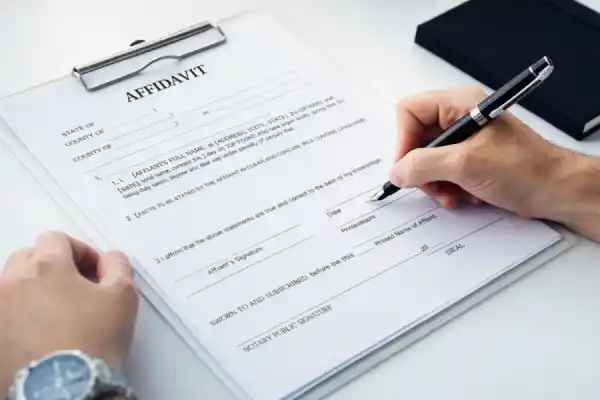
You can get a power of attorney from an estate planning attorney, a notary service, your bank, an online notary or, for use abroad, your country’s consulate. Most states require you to sign before a notary, and New York and Florida also require two witnesses. At Notaria Latina, we notarize and apostille your power of attorney.
Key takeaways
- A power of attorney (POA) lets you name an agent to act on your behalf in legal or financial matters.
- Where you get it depends on how complex your situation is and where the document will be used.
- Signing rules vary by state: New York and Florida require a notary and two witnesses; New Jersey requires a notary only.
- A notary verifies your identity and signature; a notary does not draft the document or guarantee that it is legally valid.
What is a power of attorney?
A power of attorney is a legal document in which one person, the principal, gives another person, the agent or attorney-in-fact, the authority to act on their behalf. That authority can be broad, such as managing all your finances, or limited to a single task, such as selling a specific property.
Why would you need one?
A power of attorney is not only for older adults. Anyone over 18 can benefit from one, for example if you:
- Live abroad or travel often and need someone to handle matters at home.
- Have property, bank accounts or legal matters in another country.
- Are planning for surgery, illness or aging.
- Run a business and need someone with backup authority.
Types of power of attorney
| Type | What it does | Good to know |
|---|---|---|
| General | Broad authority over financial and legal matters. | Ends if you become incapacitated, unless it is durable. |
| Durable | Stays in effect if you become incapacitated. | In New Jersey and Florida, the document must expressly say it is durable. |
| Limited (special) | Authority for specific tasks only. | The safest choice when you only need one transaction handled. |
| Springing | Takes effect only after a specific event, such as incapacity. | Not allowed in Florida for documents signed on or after October 1, 2011. |
| Health care | Lets someone make medical decisions if you cannot. | Usually a separate document with its own rules, such as a health care proxy, not a financial POA. |
Where can I get a power of attorney?
You have several options. The right one depends on how complex your situation is, how fast you need the document and where it will be used.
| Option | What you get | Best for |
|---|---|---|
| Estate planning attorney | Legal advice and a document tailored to your situation. | Complex estates, durable or health care POAs, family disputes, business matters |
| Notary service | Notarization, witnesses where required and, in many cases, apostille and translation in one place. | Straightforward POAs and documents that will be used in another country |
| Online notary | Notarization by video call with a notary registered for remote online notarization. | People who cannot visit an office or who live abroad |
| Your bank | Many banks notarize for customers, but usually do not prepare the document or handle apostilles. | You already have a finished document and only need it notarized |
| State statutory form | Some states publish an official form, such as New York's Statutory Short Form. Florida does not have one. | Standard financial POAs used within that state |
| Your country's consulate | Some consulates can issue POAs that are valid directly in their country. | POAs for use abroad, if you can wait for an appointment |
Signing requirements by state
| State | Notary | Witnesses | Durable by default? |
|---|---|---|---|
| New York | Yes | 2 disinterested witnesses; the notary may be one of them | Yes, unless the document says otherwise |
| New Jersey | Yes | Not required | No; durability language is required |
| Florida | Yes | 2 subscribing witnesses | No; durability language is required |
What the notary does (and does not do)
A notary public verifies your identity, confirms that you are signing willingly and certifies your signature. A notary who is not an attorney cannot give legal advice, choose the type of POA for you or guarantee that your document is legally valid. That is why it is important that the document is correctly drafted before you sign it.
What you need to create a power of attorney
- A valid photo ID: passport, driver's license or state ID.
- Full legal names and addresses of you and your agent.
- The specific powers you are granting, and any limits.
- Start and end dates, if applicable, and whether the POA should be durable.
- Witnesses, if your state requires them.
How to get a power of attorney, step by step
- Decide what you need: the type of POA, the powers to grant and where it will be used.
- Choose your agent: someone trustworthy, responsible and willing to act.
- Prepare the document, using your state's form or with help from an attorney for complex situations.
- Sign before a notary and, if required, two witnesses. Do not sign in advance.
- Get an apostille if the POA will be used in another country.
- Give the original to your agent and keep a copy for your records.
Is a power of attorney valid in other states or countries?
Other states: most states recognize a POA that was validly signed in another state, but banks and agencies may ask for additional documentation. Florida, for example, honors a POA executed in another state if it complied with that state's law.
Other countries: you will usually need an apostille from the state where the POA was notarized, and often a translation. Some countries also require extra steps once the document arrives, such as registering it with a local notary. Writing the POA in the language of the destination country can save time.
When does a power of attorney start and end?
A POA can start immediately or, in states that allow it, upon a future event. It ends on the date stated in the document, when you revoke it, or at your death. A non-durable POA also ends if you become incapacitated.
Common mistakes to avoid
| Mistake | How to avoid it |
|---|---|
| Signing without the required witnesses | In New York and Florida, sign before a notary and two witnesses. |
| Forgetting durability language | If you want the POA to survive incapacity in NJ or FL, include it expressly. |
| Vague powers | Describe each power and any limits clearly. |
| Using a financial POA for medical decisions | Use your state's health care document instead. |
| Skipping the apostille for use abroad | Get it from the state where the POA was notarized. |
Get your power of attorney notarized with Notaria Latina
With more than 15 years of experience serving the Latino community in the United States, Notaria Latina notarizes your power of attorney with the witnesses your state requires, in English or Spanish, at our offices or online. If your POA will be used abroad, we also handle the apostille and the translation.
Queens, New York
- 67-03 Roosevelt Avenue, Woodside, NY 11377
- Phone: 347-973-9888
- WhatsApp: 347-973-9888
Elizabeth, New Jersey
- 1146 East Jersey St, Elizabeth, NJ 07201
- Phone: 908-800-9046
- WhatsApp: 908-800-9046
Sunrise, Florida
- 2104 N University Dr, Sunrise, FL 33322
- Phone: 305-600-3290
- WhatsApp: 305-600-3290
Toll-free: 1-800-742-8602 · Book an appointment online
Legal notice: I am not an attorney licensed to practice law and may not give legal advice about immigration or any other legal matter or accept fees for legal advice.
Frequently asked questions
1. Where is the best place to get a power of attorney?
For simple POAs, a notary service or online notary is usually enough. For complex situations, such as durable or health care POAs, family disputes or large estates, work with an estate planning attorney.
2. Do I need a lawyer to get a power of attorney?
Not always. You can use your state's form for simple cases, but an attorney is recommended for complex situations, because a notary cannot give legal advice.
3. Do I need a notary for a power of attorney?
In most states, yes. New York and Florida also require two witnesses, while New Jersey requires only a notary.
4. Can I get a power of attorney online?
Yes, through remote online notarization with a notary registered to perform it. Check first that the bank, agency or country where you will use it accepts online notarizations.
5. Does a power of attorney expire?
It ends on the date stated in the document, when you revoke it or at your death. A non-durable POA also ends if you become incapacitated.
6. Can I use a US power of attorney in another country?
Usually yes, with an apostille from the state where it was notarized and, often, a translation. Some countries require additional local steps.